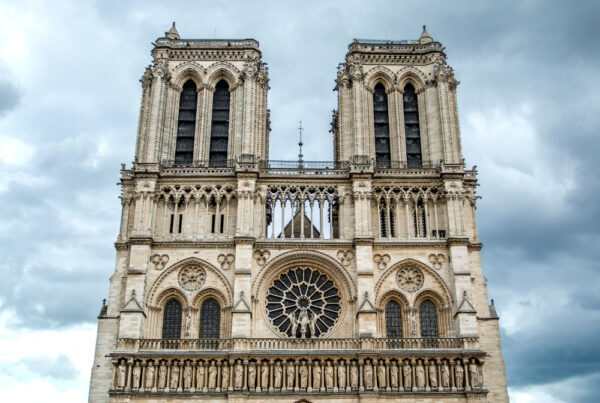

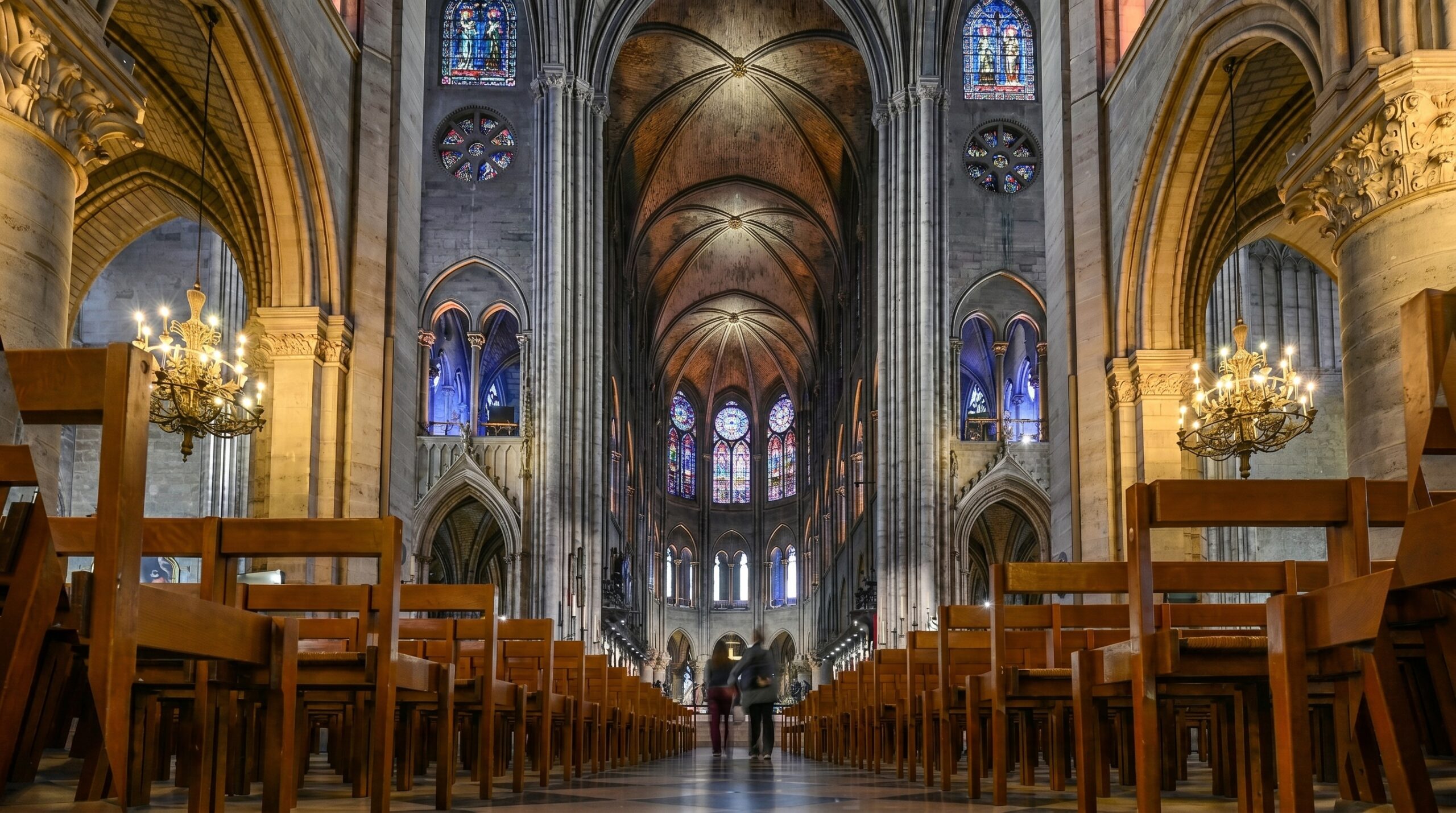
Inside Notre Dame Cathedral, you can see the soaring Gothic nave with its restored pale limestone walls, three magnificent rose windows including original 13th-century stained glass, a newly consecrated bronze altar surrounded by hand carved oak choir stalls, the Pietà sculpture by Nicolas Coustou, and the Treasury housing the Crown of Thorns. The twin bell towers offer close up views of the famous chimeras and gargoyles, while the underground Archaeological Crypt reveals nearly 2,000 years of Parisian history. The grand pipe organ with its 8,000 pipes presides over the entire length of the cathedral from the west end. Every one of these features has been either restored or renewed following the 2019 fire, and the reopening in December 2024 has made the interior brighter and more legible than it has been in decades.
The Nave and the First Impression of Scale
The first thing that hits you when you walk through the main doors is the sheer scale of the space. The nave stretches 127 meters in length, rises 33 meters to its vaulted ceiling, and is lined with massive stone pillars that pull your gaze upward before you have a chance to look anywhere else. That upward draw is not accidental. Gothic architects designed this verticality specifically to make people feel small in the presence of something larger than themselves.
Before the 2024 reopening, decades of grime had darkened the limestone walls and pillars inside the cathedral. The restoration cleaned all of it, revealing the pale warmth of the original stone. The floor, with its checkerboard marble design, now reflects the light coming through the repaired stained glass windows. Visitors who saw Notre Dame before the 2019 fire often say the interior now looks closer to how it must have appeared shortly after it was last restored in the 19th century. The side aisles running along the nave allow you to walk slowly past the architectural details without blocking the central path, and that is the better way to take in the space without feeling rushed by the crowd behind you.
The Three Rose Windows
The rose windows are the single most photographed feature inside Notre Dame, and they deserve every bit of attention they receive. There are three in total: one on the west facade above the main entrance, and one each on the north and south transepts.
The north and south rose windows are the largest, each measuring 13 meters in diameter, and both survived the 2019 fire. They were cleaned and restored during the renovation, which means the colors you see today are closer to how they looked when they were first installed in the 13th century. The north rose window is dedicated to the Virgin Mary and depicts figures from the Old Testament. The south rose window shows scenes from the New Testament and features Christ at its center surrounded by apostles and saints. The glass in both windows is original 13th-century glass, which makes them among the oldest surviving stained glass compositions of this size anywhere in the world.
Lighting matters enormously when you visit. Photographers consistently say the north window is best seen in the morning when light hits it directly, while the south window looks most vivid in the afternoon sun. If you have any flexibility in your visit time, this is worth factoring in.
The Choir, the Altar and New Liturgical Furniture
Moving past the nave toward the center of the cathedral, you reach the choir and the high altar. The original altar, lectern, and seating were destroyed in the fire, so what you see today is entirely new. The new bronze altar was designed by the Barthélémy Art foundry in the Drôme region of France and consecrated at the reopening ceremony in December 2024. The surrounding chairs, all 1,500 of them, are made from solid oak sourced from the Sologne forest region.
The choir stalls along the sides of this area are carved wood with detailed relief work depicting scenes from the life of Christ and the Virgin Mary. The high altar itself sits directly beneath the crossing, the point where the nave meets the transept, and above it, if you look up, you see the full height of the vaulted ceiling at its most dramatic point.
Near the altar, look for the Pietà by Nicolas Coustou, a large marble sculpture depicting the Virgin Mary holding the body of Christ after the crucifixion. This piece survived the 2019 fire with only minor damage and has been carefully restored to its original position. It dates from the early 18th century and is considered one of the most significant sculptures still in its original location inside the cathedral.
The Treasury and the Crown of Thorns
The Treasury is the only area inside Notre Dame that charges a separate admission fee, and it is worth the entry cost if religious history and medieval craftsmanship are interesting to you.
The most significant object in the Treasury is the Crown of Thorns, believed by the Catholic Church to be the crown placed on Christ during the crucifixion. It was purchased by French King Louis IX from the Byzantine Emperor in 1238 and has been held in Paris ever since. During the 2019 fire, it was rescued from the burning cathedral and has now been installed at the heart of a new four-meter-high reliquary designed in cedar wood.
The Treasury also holds a fragment believed to be from the True Cross, along with an elaborate gilded bronze reliquary housing it, created in the 19th century. The sacred vases and chalices now on display were newly designed in gold following the destruction of earlier items in the fire. The collection reflects over 800 years of donations from French royalty, bishops, and the faithful, and many pieces carry the kind of craftsmanship that you simply do not see in everyday settings.
The Grand Organ
Notre Dame’s pipe organ is one of the largest in France, with 8,000 pipes spread across five keyboards. It sits in the organ loft at the west end of the nave, overlooking the entire length of the cathedral. The organ itself survived the fire, though it required careful restoration due to the lead dust that covered everything inside after the roof collapsed.
Free organ performances take place every Sunday. Sacred music concerts have been running inside the cathedral since January 2025, with paid performances held regularly. Booking through the official website is recommended.
The Archaeological Crypt
Beneath the square in front of the cathedral, known as the parvis, lies the Archaeological Crypt of Notre Dame. This is a separate attraction with its own entrance and admission fee, and it is one of the most overlooked parts of a Notre Dame visit.
The crypt contains the remains of structures going back to the Gallo-Roman period, including sections of the old Roman city wall, foundations of earlier churches that stood on this site before Notre Dame was built in 1163, and medieval cellars. The site covers around 6,000 square meters underground and offers a layered look at nearly 2,000 years of Parisian history beneath one of its most famous spots.
The Bell Towers
The twin bell towers reopened to visitors in September 2025 after remaining closed since the fire. Reaching the towers requires a separate ticket booked in advance online. The climb is steep, involving several hundred steps with no elevator, but the reward is significant.
From the tower gallery, you get a close-up view of the chimeras and gargoyles that line the balustrade. The most famous of these is the Stryge, a winged figure resting its chin in its hands and looking out over Paris with what generations of visitors have described as a weary expression. These chimeras are not medieval originals but were added by architect Eugène Viollet-le-Duc during his 19th-century restoration to give the cathedral a more Gothic character. The view from the tower level also offers one of the clearest sightlines toward the Eiffel Tower and across the rooftops of the Ile de la Cité.
The towers house ten bronze bells in total. The largest, called the Bourdon Emmanuel, has been in the south tower since 1686. Its sound carries across central Paris on major religious occasions.
Plan Your Visit with Uncle Sam Tours
If you want to visit Notre Dame Cathedral with a clear picture of what you are going to see, Uncle Sam Tours can help you get there fully prepared. We cover every part of the site in depth, from the rose windows and the Crown of Thorns to the bell towers and the Archaeological Crypt. Our guides know the restored interior well and can walk you through the history, the architecture, and the stories attached to each object and space. When you know what you are looking at, the visit becomes a completely different experience, and helping you reach that point is exactly what we do.