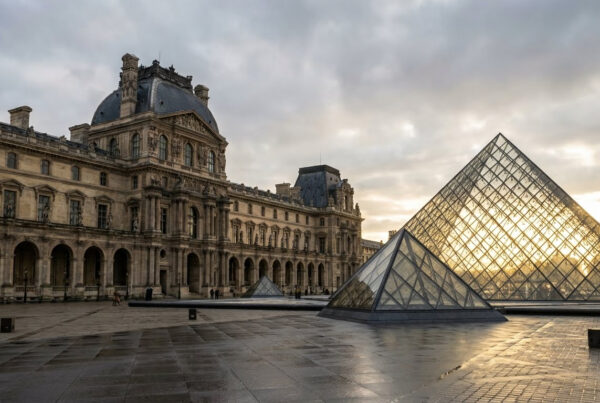

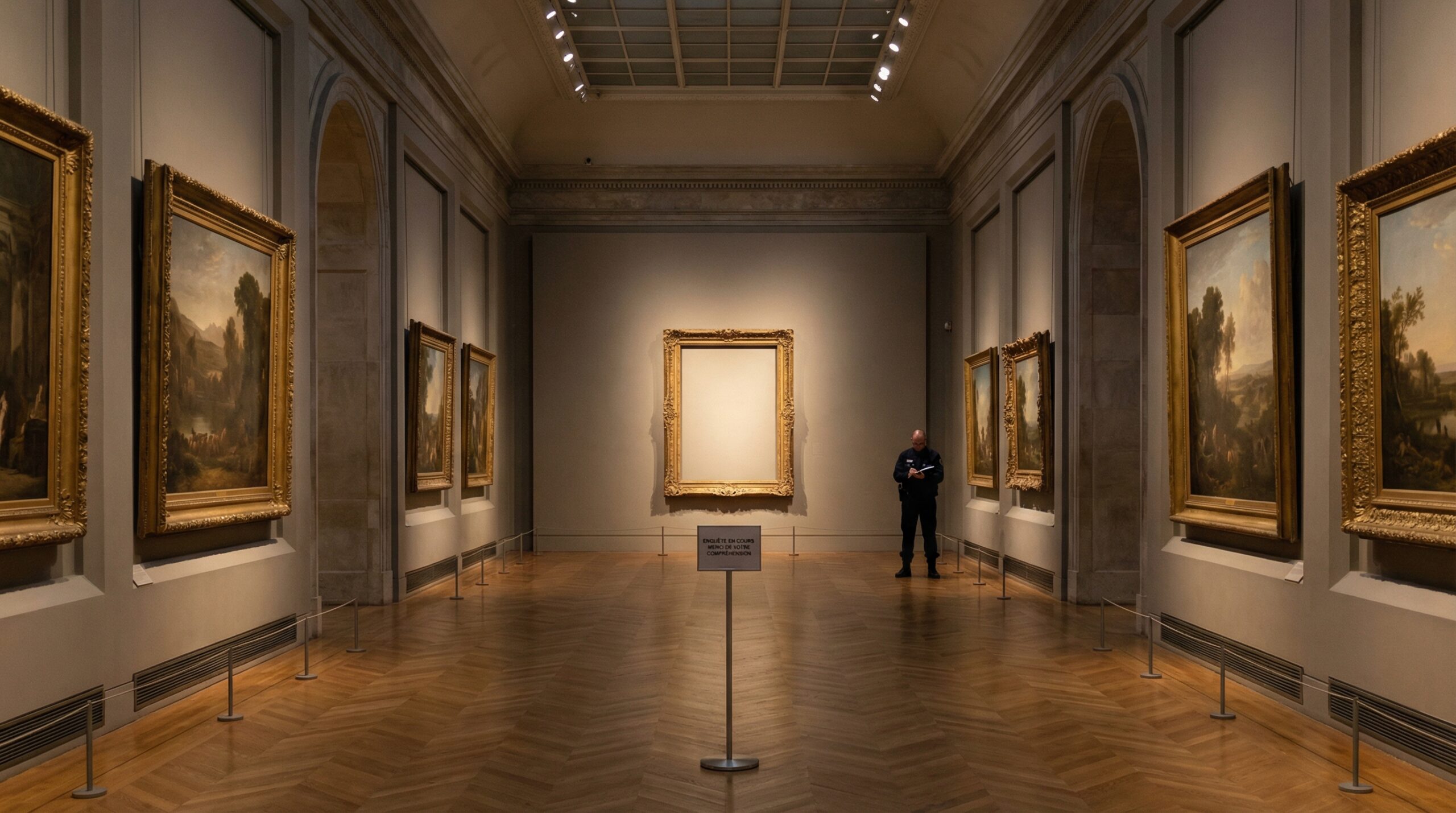
The empty frame was the first sign that something had gone wrong. On May 3, 1998, during normal visiting hours, a painting by French artist Jean-Baptiste-Camille Corot disappeared from the Louvre.
The museum was open to visitors. By the time staff realised the painting was missing, whoever had taken it was already gone. More than twenty-five years have passed, and Le Chemin de Sèvres has never been recovered.
What Happened at the Louvre?
On May 3, 1998, Le Chemin de Sèvres disappeared from one of the Louvre’s galleries while the museum was open to the public.
Exactly when the painting was taken remains unknown. Museum staff discovered the empty frame later that day and alerted police. Investigators searched the museum and spoke with staff and visitors, but the case produced few answers. No one has ever been publicly identified, and the painting has never been recovered.
More than two decades later, many details of the theft remain unknown. No detailed public account has ever explained exactly how the painting was removed or how the person responsible left the museum unnoticed.
Who Was Camille Corot?
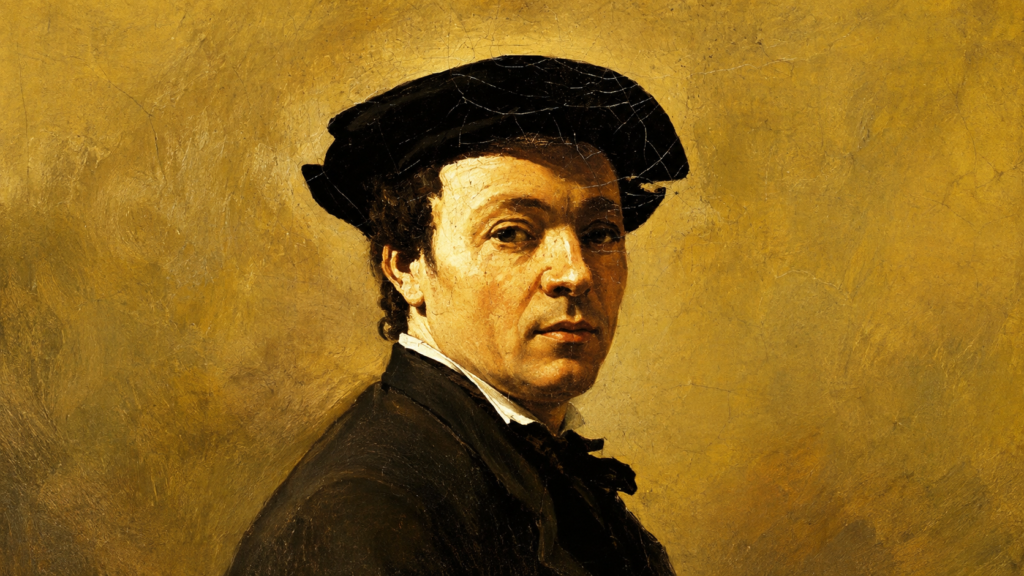
Jean-Baptiste-Camille Corot (1796–1875) was one of France’s leading landscape painters. He painted forests, rivers, villages, and quiet scenes from the French countryside, often using soft light and muted colours that became a hallmark of his work.
Corot spent much of his career before Impressionism, but his approach to landscape painting influenced many of the artists who came after him. Today, his work is displayed in museums around the world, including the Louvre, the Musée d’Orsay, the Metropolitan Museum of Art in New York, and the National Gallery in London.
Before its disappearance in 1998, Le Chemin de Sèvres was simply one of the many paintings on display at the Louvre. The theft gave the painting an unexpected place in the museum’s history.
Why Was the Theft Possible?
After the painting disappeared, attention quickly turned to the Louvre’s security. The theft raised questions about how a work of art could vanish from one of the world’s most famous museums during normal opening hours.
In the months that followed, the Louvre reviewed its security procedures and introduced additional measures to better protect its collection. The museum has continued updating those systems over the years as technology and security practices have evolved.
Is the Corot Painting Still Missing?
Yes. Le Chemin de Sèvres has never been recovered. Many stolen paintings remain missing for years. Some are eventually recovered, while others simply disappear without a trace.
A painting stolen from a museum like the Louvre is extremely difficult to sell through legitimate channels. Museums, auction houses, and serious collectors routinely verify an artwork’s provenance before buying or displaying it, making a well-known stolen painting much harder to sell openly.
Some stolen artworks resurface years later during police investigations or after being discovered in private collections. That has never happened with Le Chemin de Sèvres. Its whereabouts remain unknown, and it is still listed in international databases of stolen art. Organizations such as Interpol, through its Stolen Works of Art database, continue to help law enforcement identify and recover stolen cultural objects around the world.
Why Does This Theft Still Matter?
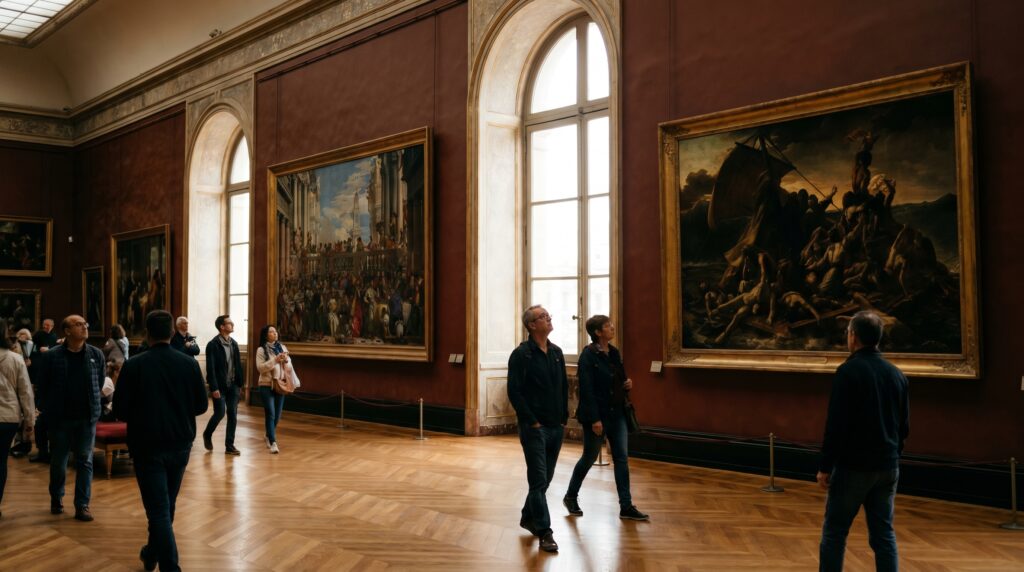
The Corot theft is remembered not because it involved one of the Louvre’s most famous paintings, but because it happened inside one of the world’s best-known museums during normal opening hours.
The gallery where the painting once hung is still visited every day, but the artwork itself never returned. That unanswered mystery has kept the story alive for more than two decades, making Le Chemin de Sèvres one of the Louvre’s best-known missing artworks.
Planning a visit to the Louvre?
Every visit to the Louvre is different. Some people come to see the Mona Lisa, while others leave talking about stories they never expected to hear. If you’re planning a trip to Paris, book your Louvre tour with Uncle Sam Tours. Along the way, you’ll see the museum’s famous masterpieces while discovering some of the lesser-known stories that have shaped its history.