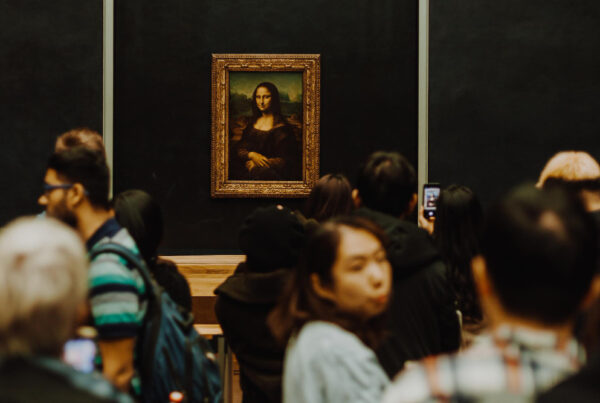

Most people arrive at the Louvre expecting one thing: the Mona Lisa. The first time I visited, I thought I would do exactly the same. I followed the crowd almost without thinking. The pace picked up, phones appeared and everyone seemed to be moving toward the same gallery. A few minutes later, I found myself standing shoulder to shoulder with hundreds of other visitors, trying to catch a glimpse of a painting that was much smaller than I had imagined.
What surprised me wasn’t the painting itself, but how quickly people moved on after seeing it. That moment changed the way I looked at the Louvre. I realised it isn’t a museum you experience by simply checking famous works off a list. With more than 35,000 objects spread across three enormous wings, the museum constantly changes depending on where you walk. The farther I moved away from the busiest corridors, the quieter it became and that was when I started enjoying the Louvre rather than simply visiting it.
Mona Lisa by Leonardo da Vinci
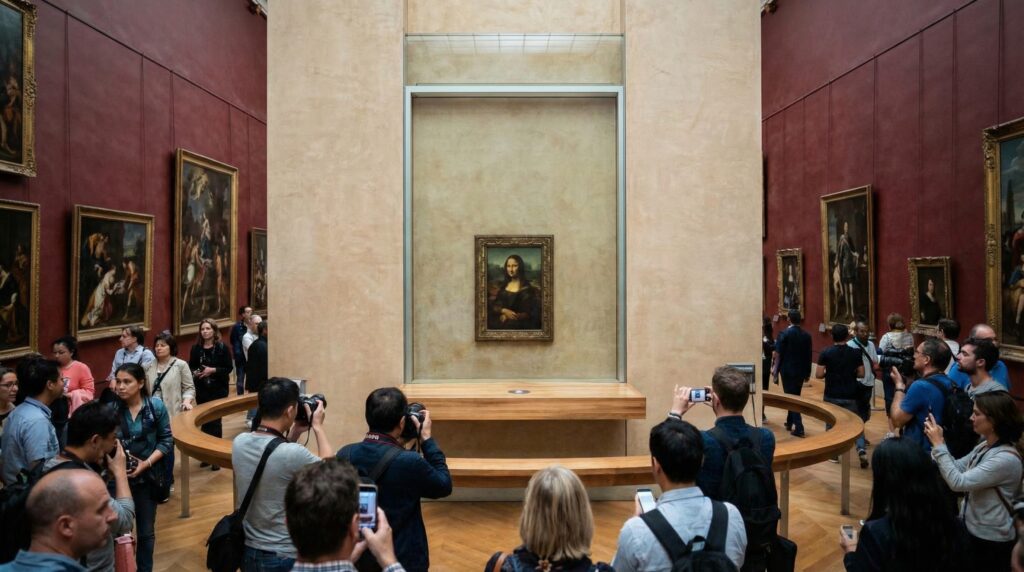
The Mona Lisa has fascinated people for more than five centuries, yet the first thing that caught my attention wasn’t her famous smile. It was her size. After seeing countless photographs online, I expected something much larger, something that matched the enormous reputation surrounding it. Instead, Leonardo da Vinci’s portrait feels surprisingly intimate.
Painted between 1503 and 1519, the delicate layers of paint create an expression that never feels completely fixed. As I moved slightly from one side to another, her expression seemed to change. At one moment she appeared calm, and at another she seemed almost amused. Perhaps that uncertainty is what has kept people fascinated for so long. The painting never gives everyone the same answer.
You’ll find the Mona Lisa in Room 711 of the Denon Wing. Visiting early in the morning can make a significant difference, as even a slightly smaller crowd allows you to appreciate the painting without feeling rushed.
Liberty Leading the People by Eugène Delacroix
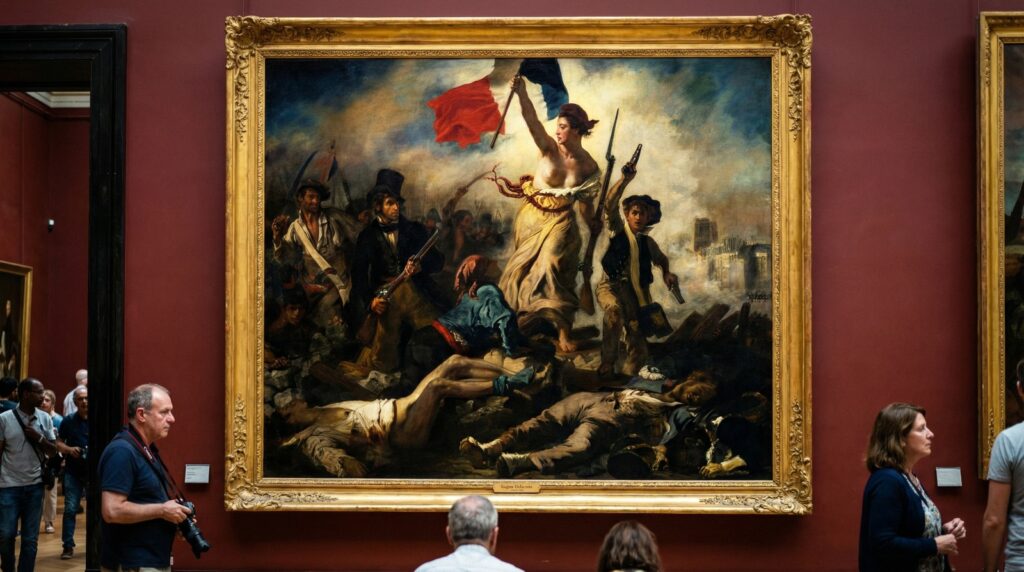
A few galleries later, the atmosphere changes completely. Smoke fills the scene as Liberty moves forward carrying the French flag, surrounded by workers, students, and ordinary Parisians caught in a moment of revolution.
Before learning more about the painting, I assumed it represented the French Revolution of 1789. It actually celebrates the July Revolution of 1830, a different uprising that took place decades later. What stayed with me was not only the historical event, but the emotions inside the painting. The people are not looking like characters who already know they will become part of history. They are standing inside a moment of uncertainty.
The longer I looked, the more details appeared. Faces hidden among the crowd became visible, and small expressions I had missed at first started telling their own stories. It reminded me that some paintings reveal themselves slowly, and a quick glance only shows part of what is there.
The Coronation of Napoleon by Jacques-Louis David
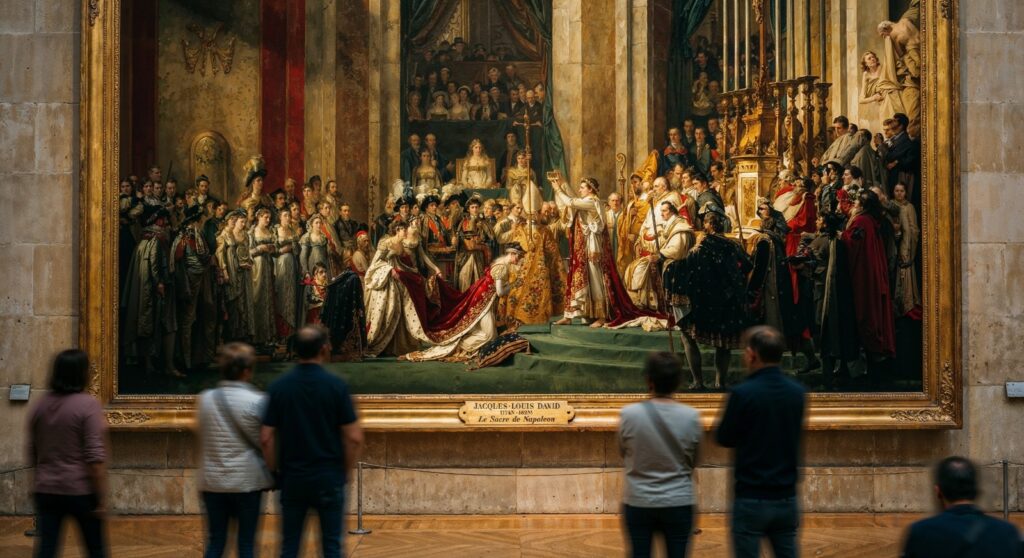
Nothing prepared me for the scale of Jacques-Louis David’s The Coronation of Napoleon. Photographs cannot fully capture the experience of standing in front of it. The enormous canvas feels less like a painting and more like a window into the ceremony itself, filled with nobles, soldiers, bishops, and members of Napoleon’s court.
The moment that stood out to me was Napoleon placing the crown on his own head before crowning Empress Joséphine. That single action reveals a great deal about how Napoleon wanted history to remember him. David was not simply recording an event. He was creating an image of power, ambition, and authority that would survive long after the ceremony ended.
The Raft of the Medusa by Théodore Géricault
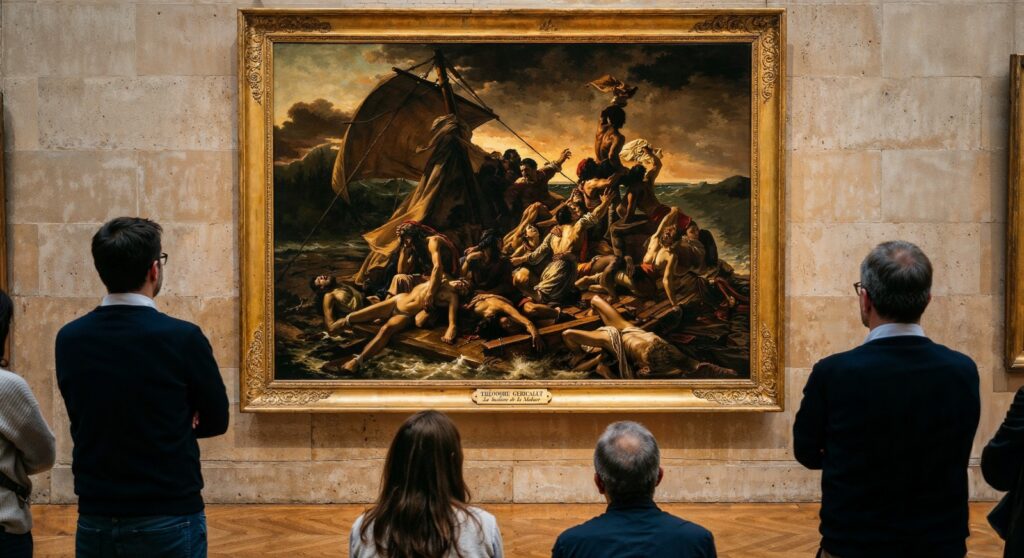
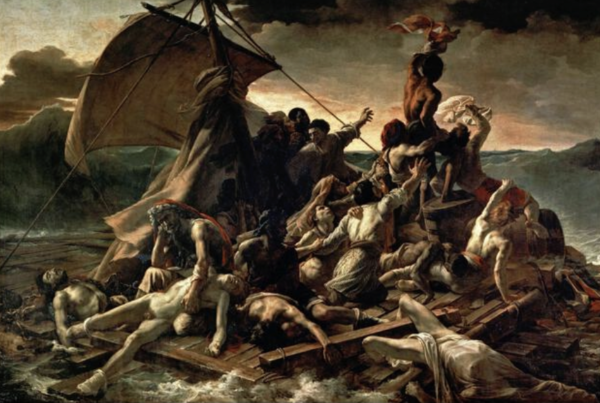
Few paintings in the Louvre stayed with me as much as The Raft of the Medusa. The painting tells the tragic story of the French ship Méduse, which ran aground off the coast of West Africa in 1816. Around 150 people were abandoned on a makeshift raft, and only fifteen survived.
Knowing that Géricault interviewed survivors before creating the painting changes the way you look at the figures. The exhaustion and desperation on their faces feel painfully real. My eyes naturally moved through the composition, starting with the bodies lying across the raft and slowly reaching the tiny ship visible on the distant horizon.
Hope is there, but barely. Even after leaving the gallery, I kept thinking about that small ship and how much meaning Géricault placed into something so easy to overlook.
The Wedding at Cana by Paolo Veronese
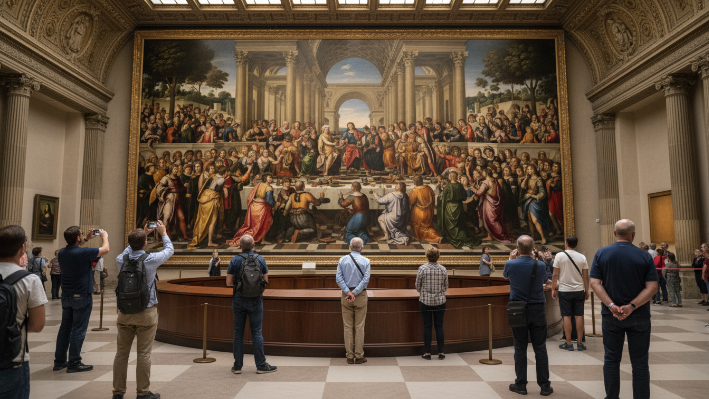
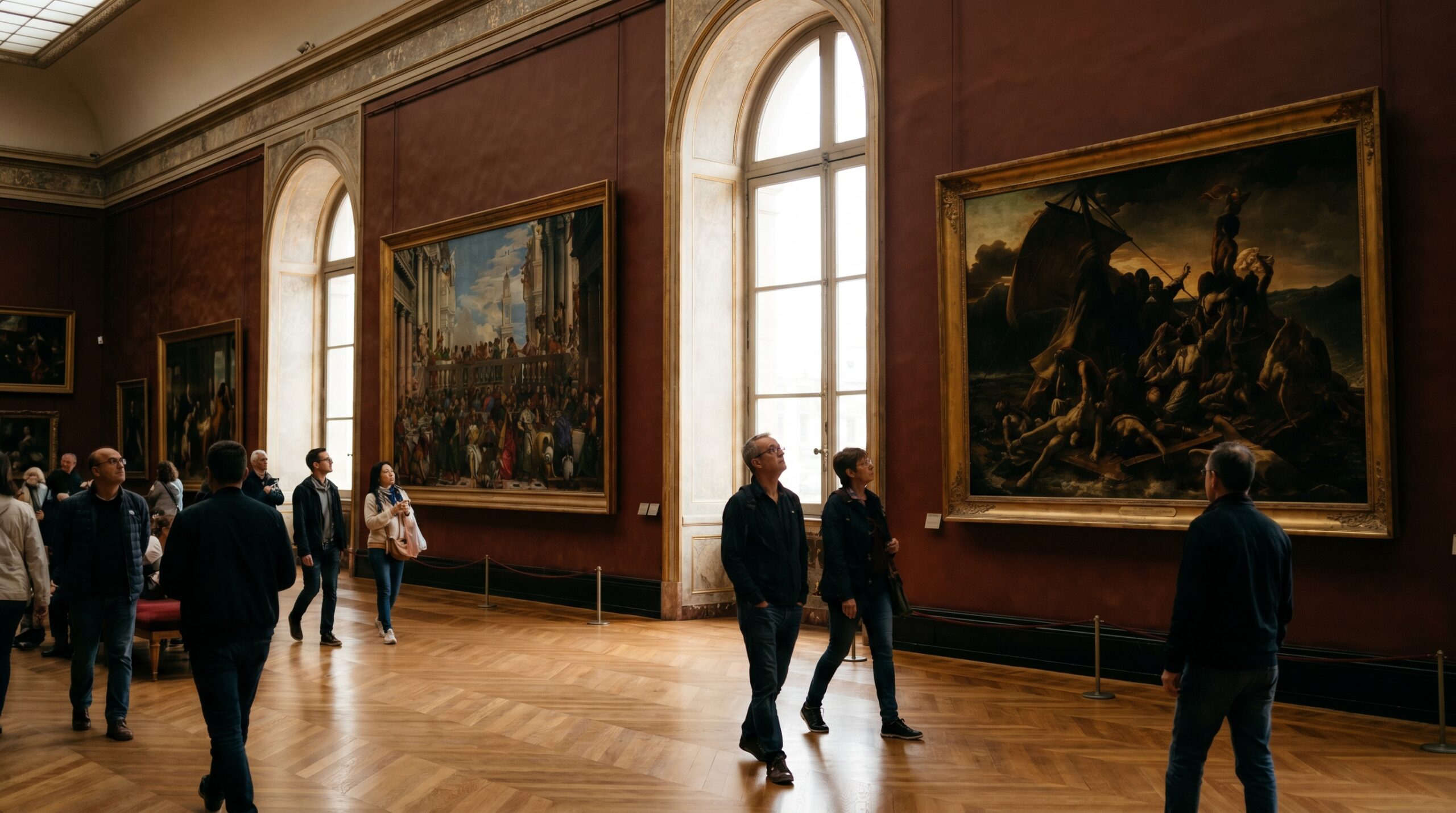
After finally seeing the Mona Lisa, I noticed something many visitors completely overlook. Almost everyone turns around and leaves, missing the enormous painting hanging directly opposite.
Veronese’s The Wedding at Cana is the largest painting in the Louvre. Instead of focusing only on the biblical miracle at its centre, the painting feels like an entire world unfolding across the canvas. Musicians play, guests interact, servants move between tables, and every corner contains another small story waiting to be noticed.
It is the kind of painting that rewards patience. The more time you spend with it, the more details begin to appear.
More Than Famous Paintings
Looking back, the paintings I remember most are not necessarily the ones I expected to love before arriving. The Louvre surprised me because each masterpiece offers something different. The Mona Lisa creates curiosity, Delacroix captures the uncertainty of revolution, David reveals the way power creates its own image, Géricault makes survival feel deeply personal, and Veronese shows how a single canvas can hold hundreds of human moments.
Nobody truly sees everything inside the Louvre. I certainly didn’t. The moments that stayed with me were the ones when I stopped trying to see everything and allowed one painting to hold my attention a little longer.
Explore the Louvre with Uncle Sam Tours
The Louvre tells you a lot more when someone helps you link the stories behind the paintings. Our licensed guides will take you through the museum on a carefully planned route explaining the artists, historical moments and overlooked details that give each masterpiece its depth. A guided Louvre tour helps you understand why these works became some of the most recognised paintings in history.