
The famous paintings at the Louvre you should not miss include the Mona Lisa by Leonardo da Vinci, Liberty Leading the People by Delacroix, The Coronation of Napoleon by Jacques-Louis David, The Raft of the Medusa by Géricault, The Wedding at Cana by Veronese, The Lacemaker by Vermeer, the Portrait of Louis XIV by Hyacinthe Rigaud, and The Death of the Virgin by Caravaggio. These eight works sit across the Denon, Sully, and Richelieu wings, and each one carries a story worth knowing before you stand in front of it.
The Louvre holds over 35,000 works across three massive wings, and going in without a clear idea of what to see means spending most of your time navigating corridors rather than looking at art. This guide gives you the famous paintings at the Louvre, the exact room locations for each, and a practical route so your visit actually works
Understanding the Three Wings Before You Walk In
The Louvre has three main wings, and knowing which one holds what saves a lot of wandering.
The Denon Wing runs along the Seine side and attracts the largest crowds. The famous paintings at the Louvre that most people come to see, including the Mona Lisa and the grand Italian and French canvases, are all here. First-time visitors spend most of their time in this wing.
The Sully Wing covers the central part of the museum and wraps around the Cour Carrée. It holds ancient Egyptian antiquities, Greek and Roman collections, and French paintings on the upper floors. This wing runs noticeably calmer than Denon on most days.
The Richelieu Wing sits along the Rue de Rivoli side and houses Northern European paintings, Dutch and Flemish masters, French sculptures, and the Napoleon III Apartments. Many visitors skip it entirely, which means you get far more space when you visit.
Famous Paintings at the Louvre You Should Not Miss
1.The Mona Lisa by Leonardo da Vinci
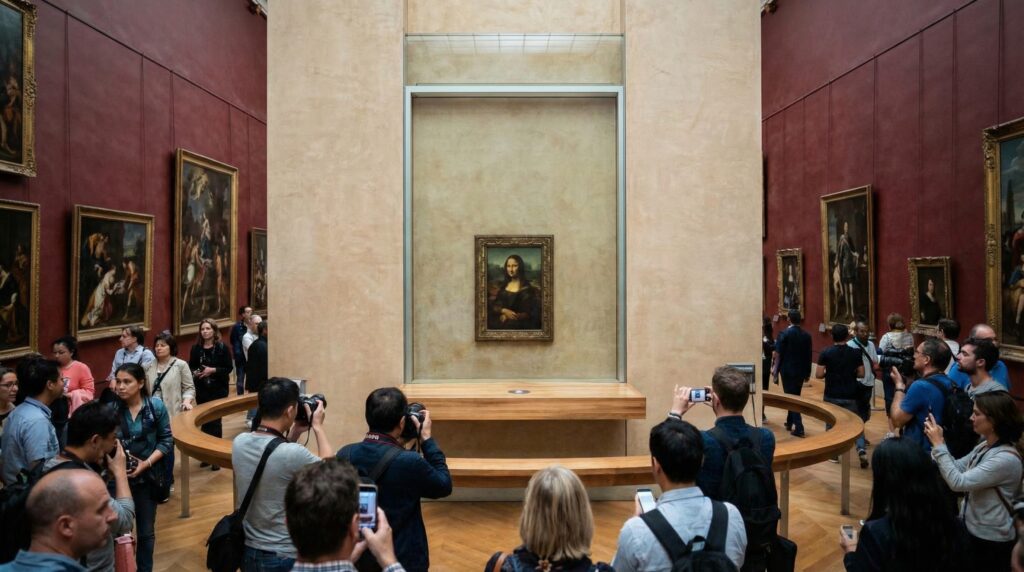
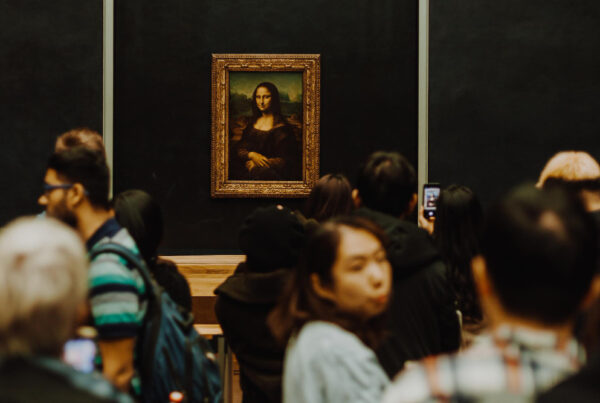
The Mona Lisa ranks among the most famous paintings at the Louvre and in the entire world. Da Vinci painted it between 1503 and 1519, and the subject is believed to be Lisa del Giocondo, the wife of a Florentine merchant. His sfumato technique creates smooth transitions between light and shadow with no visible brushstrokes, giving the face a quality that feels almost alive.
The painting measures roughly 77 by 53 centimeters, smaller than most visitors expect, and it sits behind bulletproof glass at the far end of a large room. During busy hours, you view it from a distance with a crowd in front. Arriving at 9 AM when the museum opens, or visiting on a Friday evening after 6 PM, makes the experience much more personal.
2.Liberty Leading the People by Eugène Delacroix
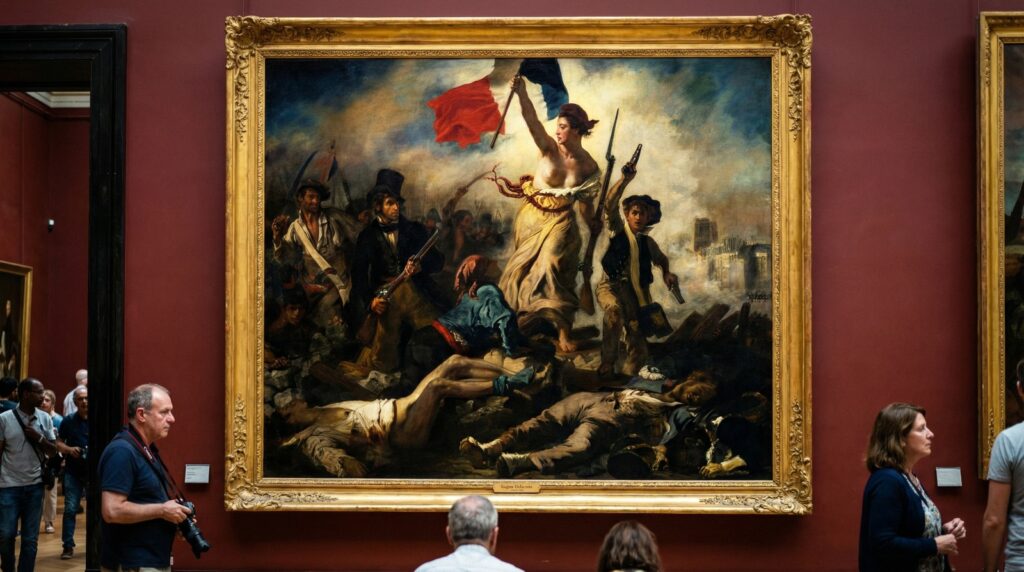
Delacroix painted this in 1830, capturing the Paris uprising of July that year when armed revolutionaries overthrew King Charles X. This is not about the French Revolution of 1789. The central figure of Liberty holds the French tricolor flag with striking confidence, and the image has influenced art and design for nearly 200 years, from the Statue of Liberty to the Les Misérables theatrical poster. The painting went through a recent restoration, and its colors are more vivid now than they have been in decades
3.The Coronation of Napoleon by Jacques-Louis David
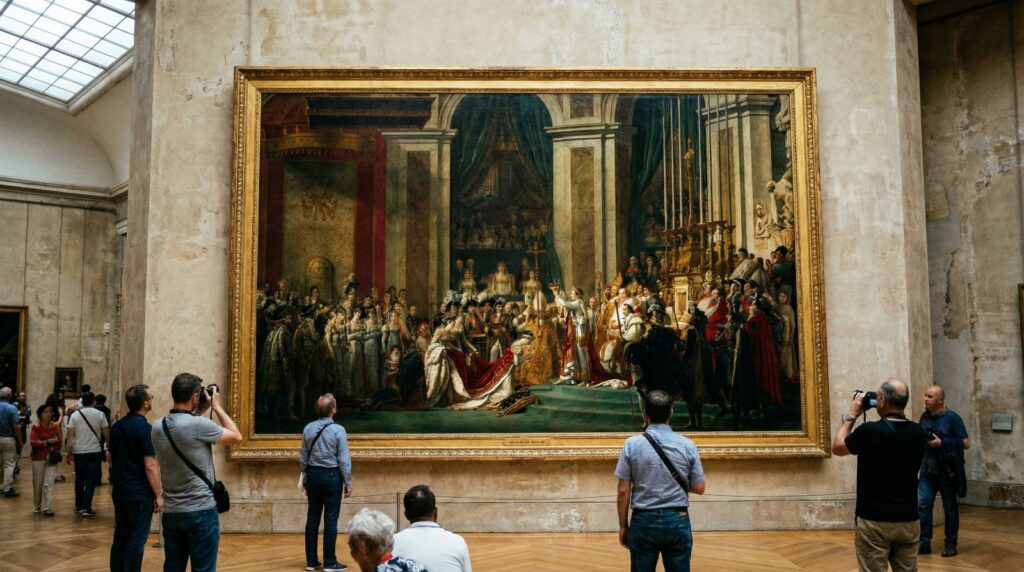
This painting runs roughly 10 meters wide and 6 meters tall. Napoleon commissioned David to record his coronation at Notre-Dame Cathedral on December 2, 1804. The scene David captured shows Napoleon taking the crown from Pope Pius VII and placing it on his own head, a deliberate act that separated his authority from the Church. David completed the work in 1807, and over 200 individual figures fill the canvas. The scale alone makes it worth standing in front of for a few minutes.
4.The Raft of the Medusa by Théodore Géricault
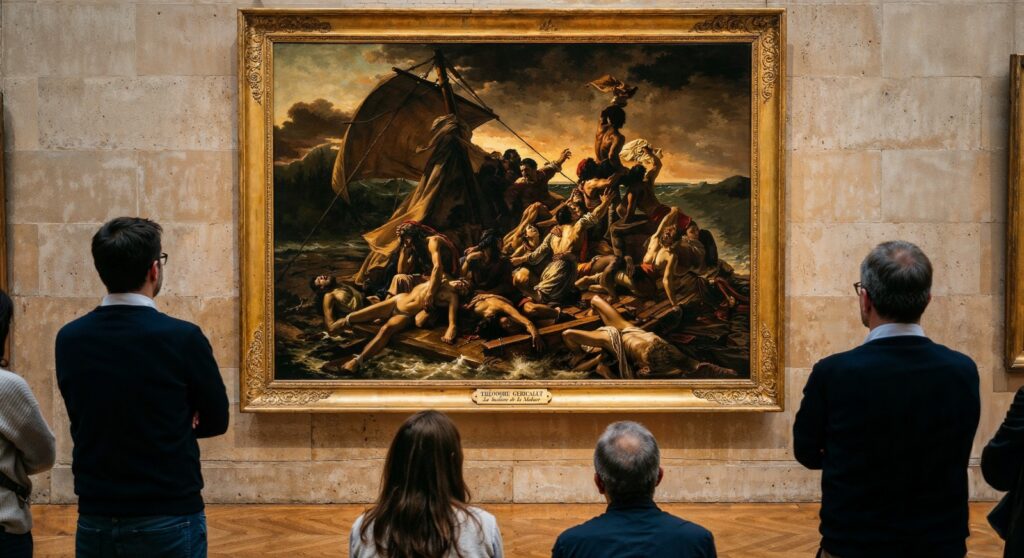
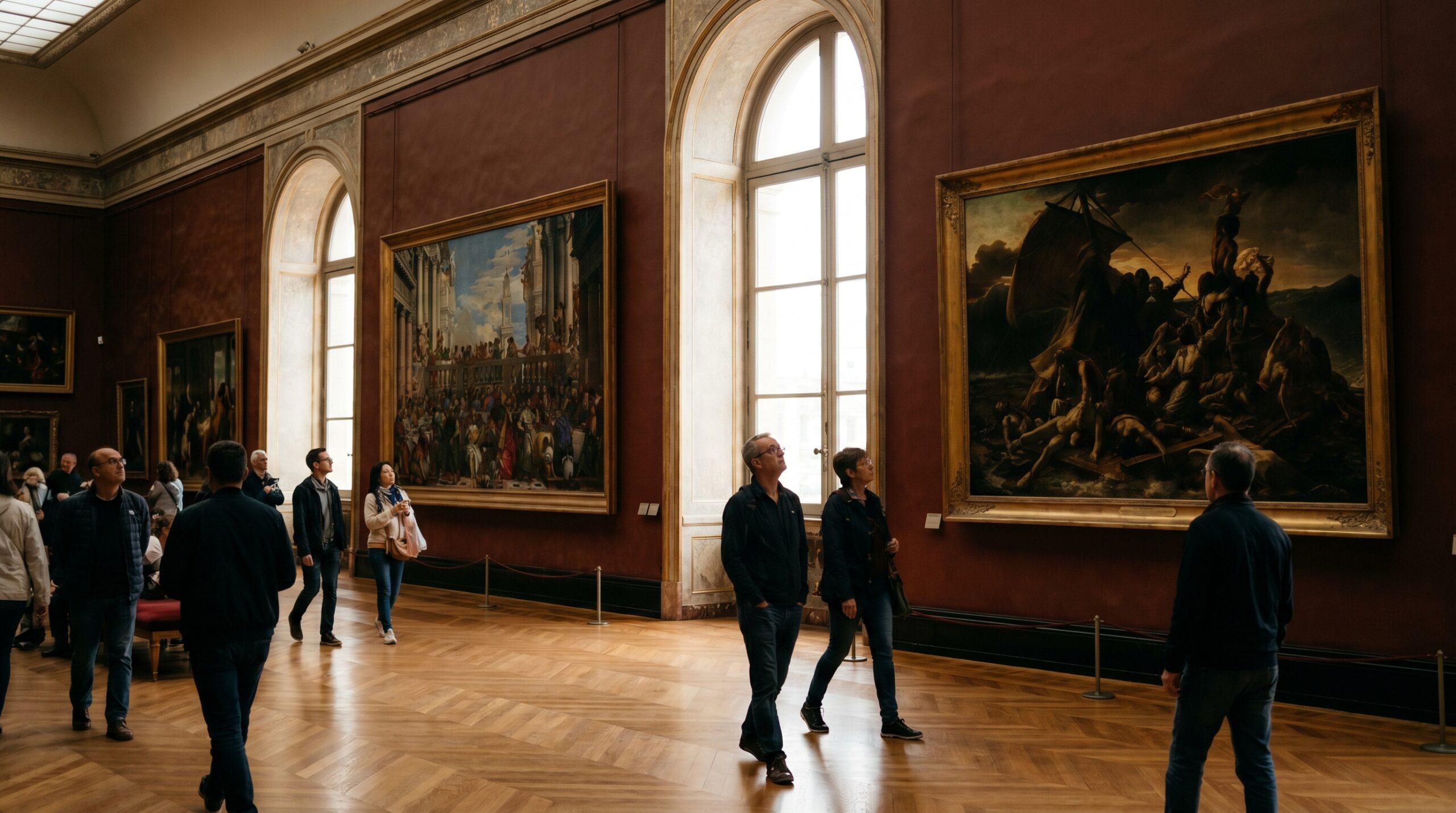
Raft of Medusa hangs in Room 700 alongside the Delacroix, and it draws you in before you have fully processed what you are looking at. Géricault painted it between 1818 and 1819 based on a real disaster. In 1816, a French naval frigate called the Méduse ran aground off the coast of Africa, leaving around 150 survivors on a makeshift raft for 13 days. Only 15 people survived. Géricault was 27 years old when he painted this, and he interviewed survivors and studied the dying to get the scene right. Room 700 holds both this work and the Delacroix, making it one of the most powerful rooms in the entire museum.
5.The Wedding at Cana by Paolo Veronese
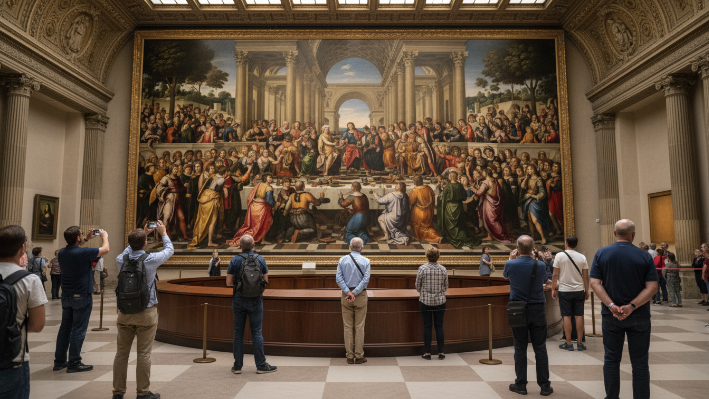
This painting hangs directly opposite the Mona Lisa, and most visitors walk past it without a second look. The Wedding at Cana measures roughly 6.7 by 9.9 meters, placing it among the largest famous paintings at the Louvre. Benedictine monks in Venice commissioned it in 1562 to depict the biblical story of Jesus turning water into wine. Veronese used that subject to paint a detailed portrait of 16th-century Venetian high society, and art historians believe the musicians in the foreground are likenesses of Titian and Tintoretto.
6.The Lacemaker by Johannes Vermeer
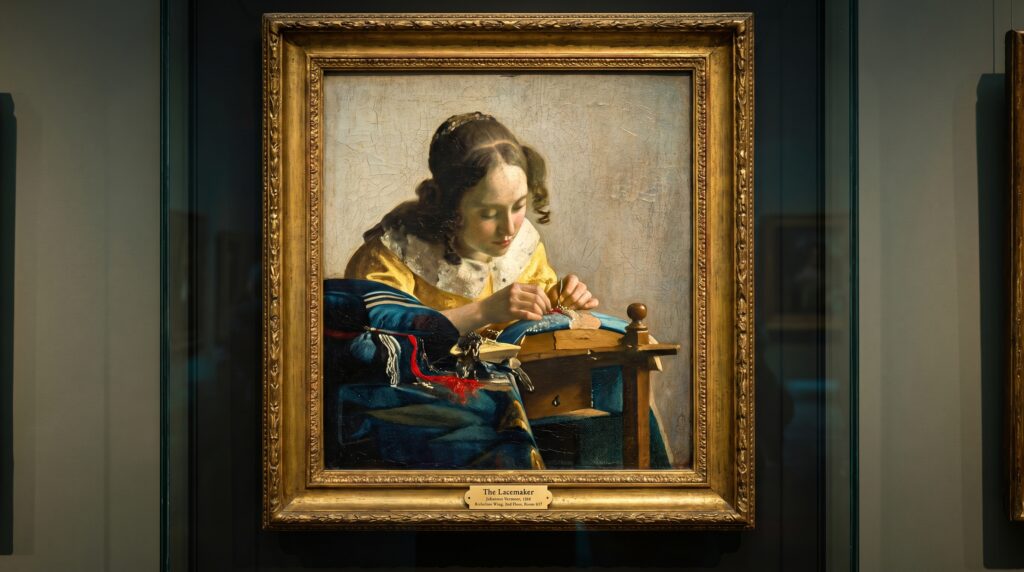
Vermeer painted this around 1669 to 1670, and at roughly 24 by 21 centimeters it is one of the smallest works on this list. The young woman leaning over her lacemaking is painted with such close attention to light and texture that the work carries a near-photographic quality. The Richelieu Wing runs quieter than Denon on most visits, and standing in front of this small canvas in a calm room leaves a stronger impression than many visitors expect.
7.Portrait of Louis XIV by Hyacinthe Rigaud
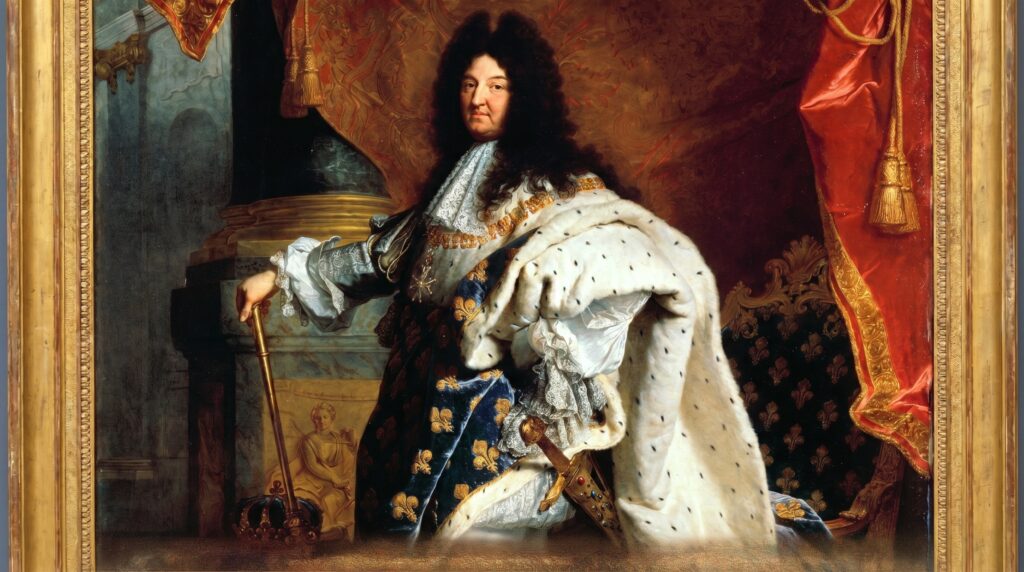
Rigaud completed this portrait in 1701, showing Louis XIV at 63 in his full coronation robes. He originally painted it as a diplomatic gift for Philip V of Spain, but the French court loved it so much they kept the original and sent a copy instead. The Sun King stands with high heels, fashionable among French court men at the time, and the work shows precisely how portraiture served as political communication. The Sully Wing often gets overlooked between Denon and Richelieu, so Room 34 is usually quiet.
8.Death of the Virgin by Caravaggio
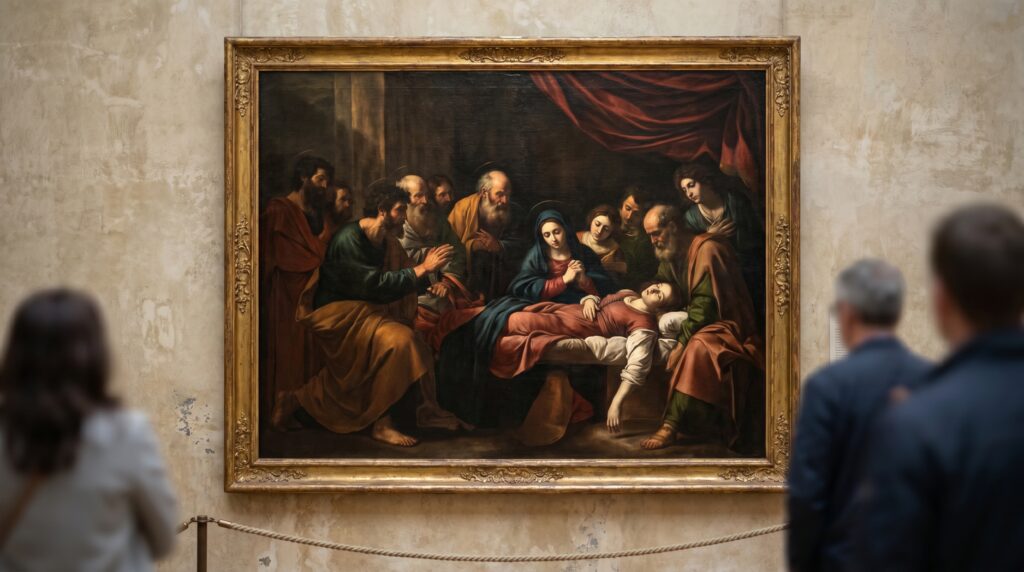
Caravaggio painted this around 1604 to 1606, and the church that commissioned it refused to display it. The Carmelite friars rejected the work because Caravaggio painted the Virgin Mary as an ordinary woman, swollen and pallid in death, with bare ankles and no angels or divine light around her. For a sacred subject at the time, that level of raw realism was considered deeply inappropriate.
How to Plan Your Visit Around the Famous Paintings at the Louvre
How Much Time Do You Need
Most visitors spend between two and five hours at the Louvre. Seeing all eight paintings on this list with enough time at each one takes at least three hours. Adding the Egyptian antiquities in Sully or the Napoleon III Apartments in Richelieu pushes the visit to four or five hours.
When to Go
The Louvre closes every Tuesday. Most days it opens from 9 AM to 6 PM, and on Wednesdays and Fridays it stays open until 9:45 PM.
Friday evenings after 6 PM offer one of the calmest ways to visit. Visitor numbers drop noticeably, and the galleries, including the Mona Lisa room, feel completely different from daytime visits. Weekday mornings between 9 AM and 10 AM also run calmer, though tour groups start arriving around 10:30 AM. The 11 AM to 3 PM window is the busiest part of any day, so avoiding it makes a real difference. For the quietest trip overall, November through March works well, outside of the Christmas and New Year period.
Which Entrance to Use
Most visitors enter through the main glass Pyramid in the Cour Napoléon. The Carrousel du Louvre entrance at 99 Rue de Rivoli is an underground option that leads directly into the museum and usually has shorter queues. The Porte des Lions entrance in the Denon Wing is also worth checking, though it is not always open. Booking tickets online in advance is strongly recommended for any entrance, especially in peak months.
A Suggested Route Through All Eight Paintings
Start in the Denon Wing on the 1st floor. Go to Room 711 first for the Mona Lisa and the Wedding at Cana. Walk to Room 700 for Liberty Leading the People and the Raft of the Medusa. Continue to Room 75 for the Coronation of Napoleon, then to Room 60 for the Grande Odalisque.
Cross to the Sully Wing and head to the 2nd floor for the Portrait of Louis XIV in Room 34. Finish in the Richelieu Wing on the 2nd floor at Room 837 for Vermeer’s Lacemaker. Walk through the covered sculpture courtyards on the Richelieu ground floor before you leave.
Book Your Tour with Uncle Sam Tours
Reading about these eight masterpieces is a great start, but navigating three massive wings to find them can easily turn an incredible art experience into an overwhelming maze of corridors and crowded rooms.
At Uncle Sam Tours, our guides handle the route, the timing, and the shortcuts so you can focus on the art. We know how to avoid the heaviest crowds at the Mona Lisa and lead you straight to quiet spaces for smaller masterpieces. Instead of checking map signs or listening to a dry audio loop, you get to explore with a local expert who brings the history to life. Book your Louvre tour today and experience the complete collection, ensuring you don’t miss any of the world’s most iconic art pieces.