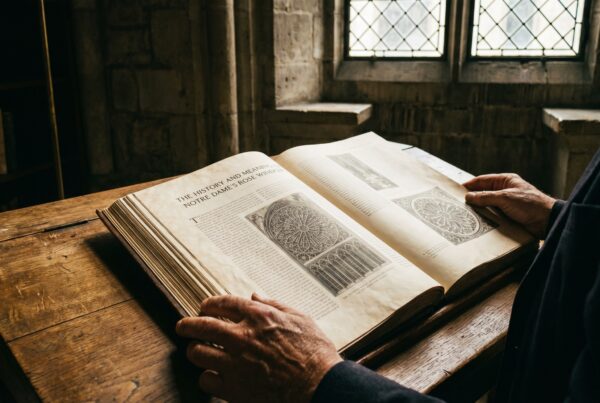

Notre Dame Paris has stood at the heart of French civilization for over 850 years. For most of that time, stepping inside meant walking into a masterfully constructed sacred space. The interior is not simply a church nave with rows of pews. Instead, it is a layered environment where architecture, art, theology and history meet. After years of closure following the 2019 fire, the cathedral reopened in December 2024. Visitors now frequently ask , what exactly will I see when I walk through those doors?
This guide answers that question in full. Perhaps you are planning a Notre Dame Paris tour or simply want to understand the building better. Everything covered here reflects the actual layout and contents of the cathedral as it stands today.
The Meaning Behind the Cathedral and Why Millions Visit
The name Notre Dame translates from French as “Our Lady.” This refers to the Virgin Mary, to whom the cathedral is dedicated. The city officially names the building the Cathedral of Notre Dame de Paris. Construction began in 1163 under Bishop Maurice de Sully. The project took nearly 200 years to complete, finally finishing around 1345.
Notre Dame Paris remains distinct from other Gothic cathedrals because its original design survived largely intact. Architects designed the building to instruct and inspire. Every carved portal, window and painted panel serves a specific theological purpose. Visitors often sense that the space feels unique, even if they do not immediately understand why.
The cathedral draws around 12 to 14 million visitors annually. This massive number reflects deep cultural interest rather than just religious pilgrimage. People arrive from dozens of countries to witness a building that occupies a central place in European history.
The Interior Layout and Initial Experience
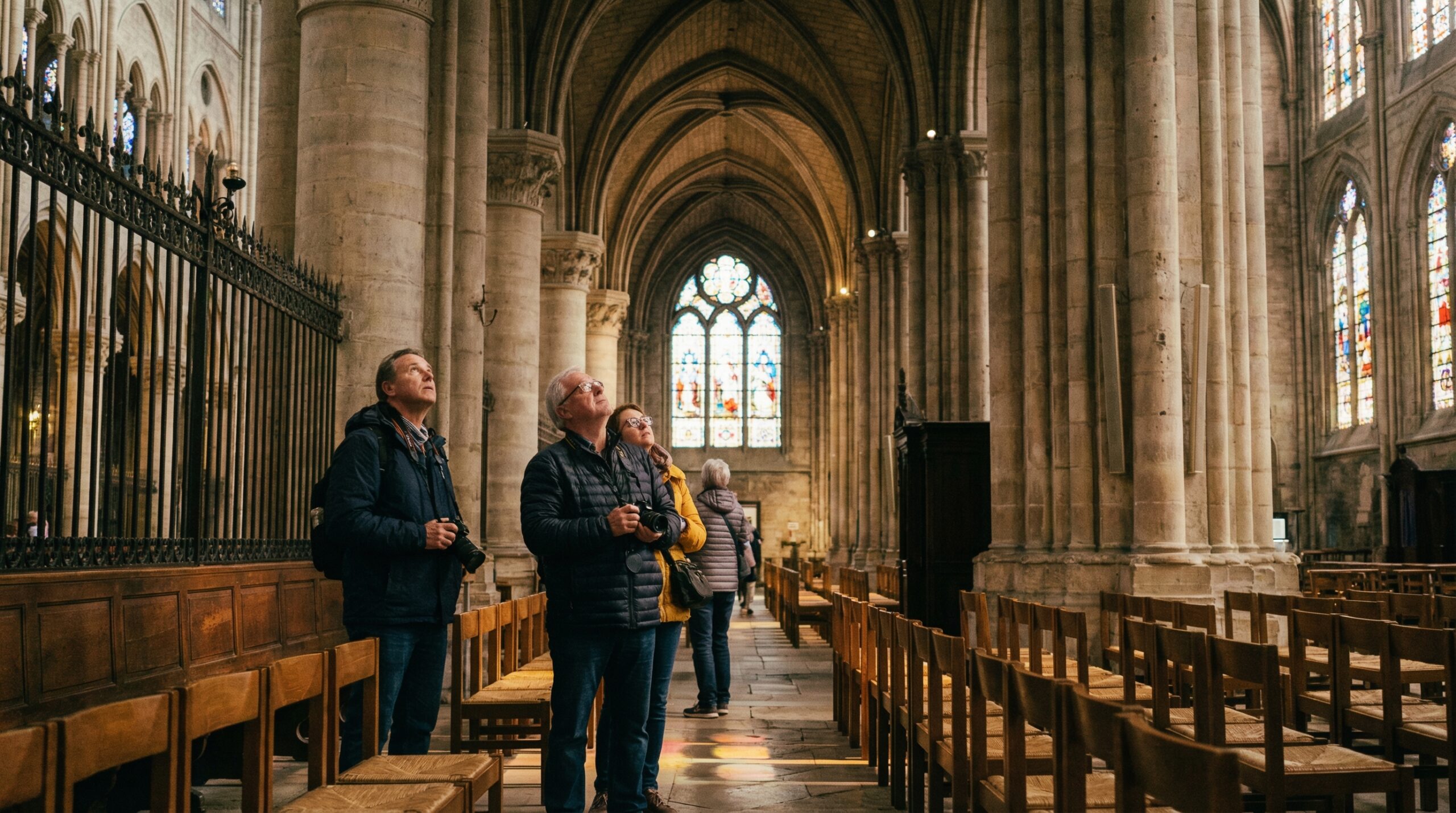
When you step inside Notre Dame Paris, the experience is primarily spatial. The nave stretches roughly 130 meters from the entrance to the far end. Ceiling vaults rise 33 meters above the floor. The nave and side aisles span about 48 meters at the transept. These numbers feel immense when you are standing within the space.
The floor plan follows a standard Latin cross shape. As you enter from the west facade, you move through the narthex into the main nave. Massive cylindrical columns line the nave to support the vaulted ceiling. Double side aisles flank the central space, which gives the interior a rare sense of width.
The transept arms extend north and south from the central crossing. Here, two large rose windows flood the area with colored light. Beyond this crossing, the choir and high altar occupy the eastern end. An ambulatory wraps around the apse, providing access to several radiating chapels.
For a comprehensive experience, the Notre Dame Paris tour route typically follows this west to east layout. Uncle Sam Tours offers guided options that provide vital historical context.
Historic Art and Sculptures Within the Nave
The interior of Notre Dame Paris holds a significant collection of art spanning several centuries. Before the 2019 fire, the cathedral contained 22 decorated chapels. Many of these works were removed or protected before the fire reached them. Restorers have since returned many pieces to their original positions.
Among the most famous works are the large paintings known as the “Mays.” Members of the Paris goldsmiths’ guild painted these annually between 1630 and 1707. They depict scenes from the Acts of the Apostles. These works represent some of the finest French Baroque religious art in existence. Several “Mays” survived the fire and are returning to the chapels.
The choir area contains detailed wooden stalls from the 18th century. Commissioned by Louis XIV, these stalls feature relief carvings of biblical scenes. The high altar stands beneath a gilded canopy. This Baroque addition contrasts beautifully with the surrounding Gothic stone.
Sacred Relics and the Crown of Thorns
The cathedral also houses several relics of immense importance. The most famous is the Crown of Thorns. According to tradition, this is the actual crown placed on Jesus during the Passion. King Louis IX of France acquired the relic in 1239. It has remained at the cathedral for centuries.
During the 2019 fire, firefighters and clergy prioritized saving the treasury. They successfully removed the crown, which escaped any damage. It has since returned to its place of honor within the cathedral.
Practical Information for Visiting Notre Dame Paris Today
New Notre Dame Paris hours are now in effect. The cathedral is open daily, but entry requires a timed reservation. This system helps manage the high volume of visitors. You should book your slot in advance through the official website or a tour operator like Uncle Sam Tours.
The mass schedule remains active. Daily masses occur at specific times, separate from general sightseeing. Attending a mass offers a quieter atmosphere and different lighting. However, certain areas may be restricted during services.
Where is the cathedral located? It sits on the Île de la Cité in the 4th arrondissement. You can reach it via the Cité Metro station on Line 4. The surrounding plaza has been redesigned to provide a wider, more accessible public space.
A guided Notre Dame Paris tour makes a measurable difference. The building contains an overwhelming volume of detail. Without a guide, visitors often miss the most significant historical elements. Booking through experts like Uncle Sam Tours transforms a simple visit into a truly educational experience.