
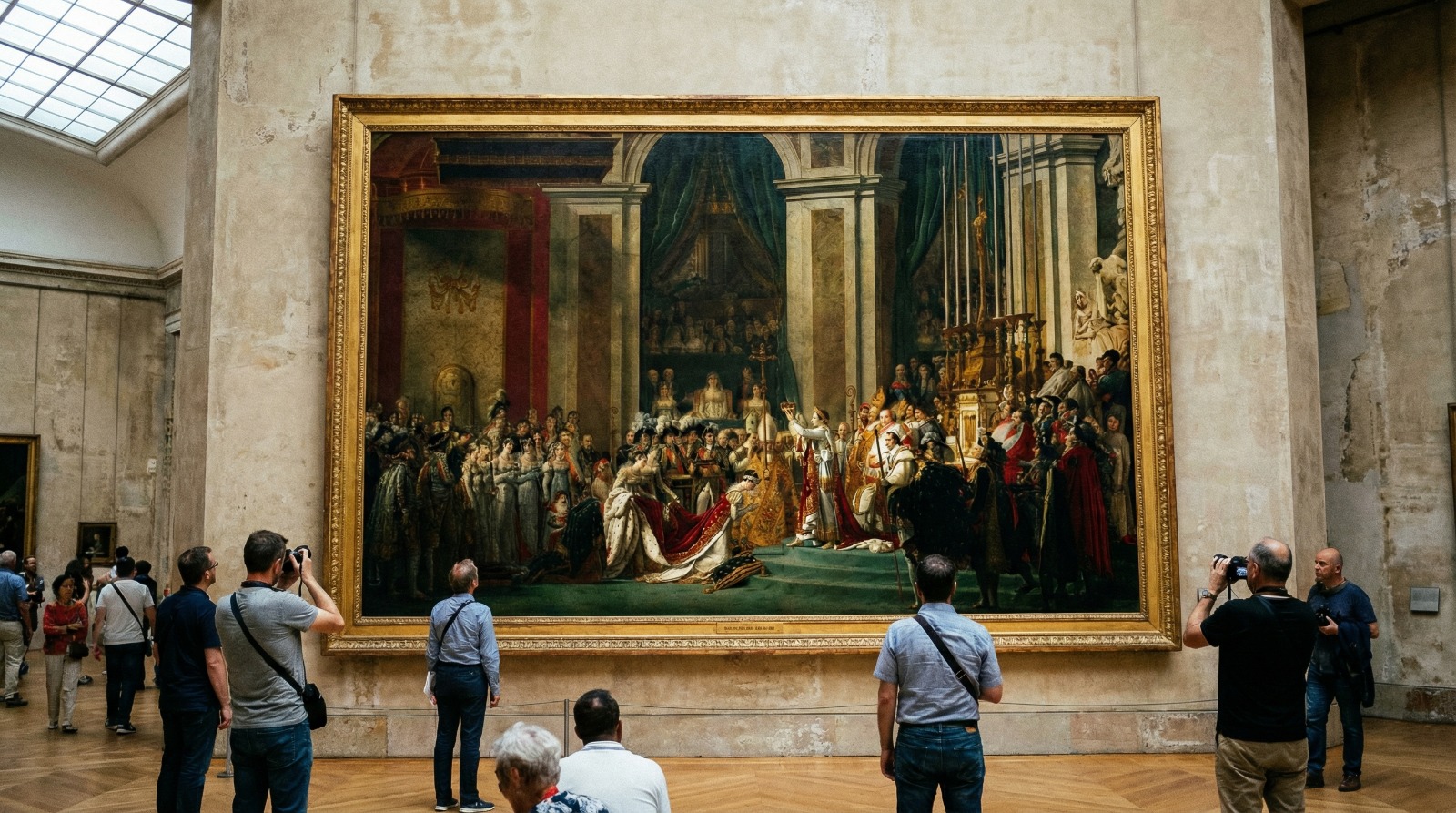
You cannot separate the art from the artist. The coronation of napoleon louvre painting is not just a depiction of an emperor because it is the masterpiece of a political survivor. Jacques-Louis David transformed imperial ambition into visual power through this monumental work. Initially, David voted for the execution of Louis XVI and maintained a close association with Maximilien Robespierre. However, when the Revolution collapsed, he adapted to survive and became First Painter to Napoleon Bonaparte. Consequently, he produced one of the most powerful political paintings in European history.
The Commission That Changed Everything
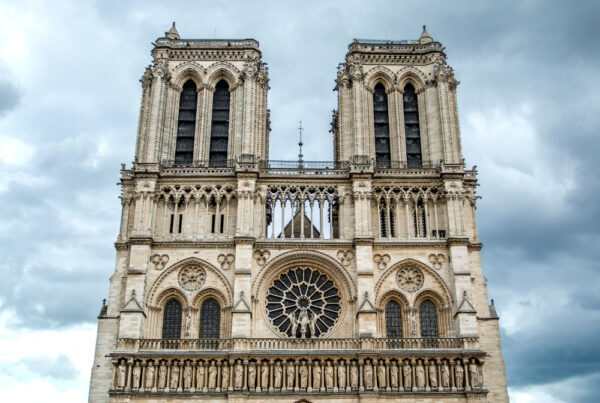
Napoleon did not want a simple portrait because he required a monument to legitimize his rule. Specifically, he wanted a presentation of himself as a ruler chosen by destiny. On December 2, 1804, David attended the ceremony inside Notre Dame Cathedral. During the event, he carefully observed the lighting and the ceremonial robes. These sketches later became the foundation of the massive canvas now displayed in the Louvre Museum.
Symbolic Lies and Propaganda
While the painting looks like a historical photograph, it contains several deliberate “lies” designed to please the Emperor. For example, David painted Napoleon’s mother, Letizia Bonaparte, in a prominent central seat. In reality, she refused to attend the ceremony due to a family dispute. Furthermore, David depicted the Pope with a raised hand in a gesture of blessing. Originally, David sketched the Pope with his hands on his knees, but Napoleon demanded the change to show the Church’s active support for his reign.
The Monumental Scale of the Painting
First, visitors always notice the extraordinary size of the coronation of napoleon louvre painting.
- Height: 6.21 meters
- Width: 9.79 meters
Actually, it is the second largest painting in the Louvre after The Wedding at Cana. David rented a former church to accommodate the enormous canvas. While assistants handled decorative details, David personally painted the central figures. Therefore, the work required three years of intense labor on scaffolding and ladders.
David’s Self Portrait Within the Scene
Furthermore, David did not remain invisible in his work. In the upper gallery near Napoleon’s mother, visitors can see a figure sketching in a notebook. This figure represents the artist himself. By placing himself among the witnesses, David elevated his role from craftsman to historical participant. Certainly, this was a subtle but deliberate assertion of his own importance.
Working Under Imperial Scrutiny
In addition, completing the coronation of napoleon louvre painting was politically delicate. Napoleon frequently visited the studio and requested specific changes.
- The Pope: David altered the gesture of Pope Pius VII to suggest an active blessing.
- Court Dress: David modified details of court dress to reflect a stronger military image.
When David completed the painting in 1808, Napoleon reportedly admired it for nearly an hour. Eventually, he remarked that one could walk through the scene.
Legacy of Jacques-Louis David
Ultimately, this work marked the height of David’s influence. After Napoleon’s fall in 1815, the artist went into exile and later died in Brussels in 1825. Today, the painting remains one of the most visited masterpieces in the Louvre. It stands as proof that political power fades while art endures.