
We often assume that the Louvre is an impenetrable fortress, yet a thief proved as recently as 1998 that low-tech methods can still work. Interestingly, this was not a sophisticated midnight break-in. Instead, it happened while the museum was fully open to the public. The victim was a small landscape painting by Camille Corot titled Le Chemin de Sèvres. This event remains one of the most embarrassing Louvre Museum thefts in modern history and eventually led to a total security overhaul.
The Bold Incident in Room 65
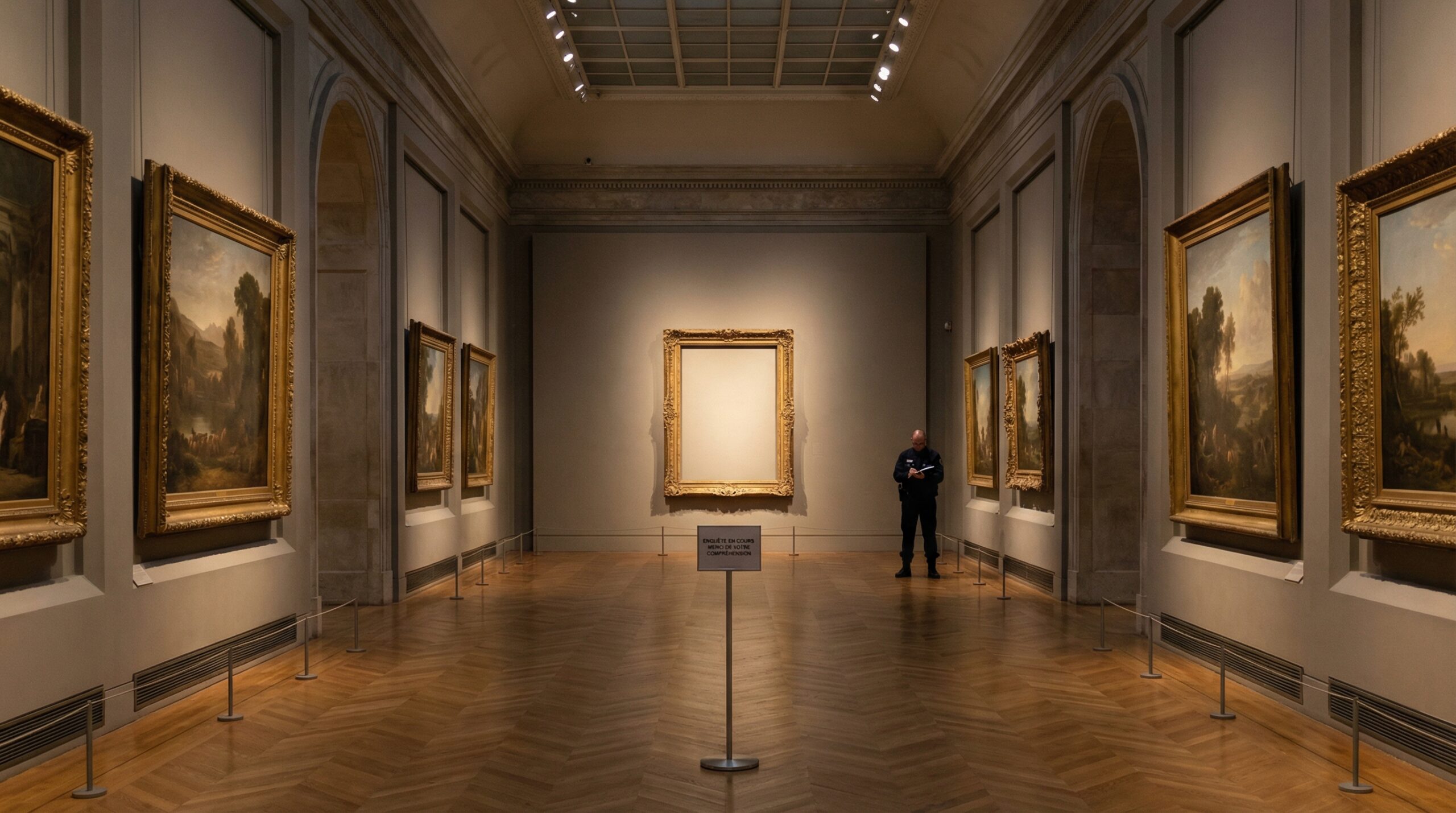
On Sunday, May 3, 1998, the museum was typically busy with weekend crowds. The painting hung in Room 65 on the third floor, which is an area that houses nineteenth-century French paintings. Because this wing is generally less crowded than the Mona Lisa area, it provided the perfect opportunity for a criminal.
Sometime between 2:00 PM and 4:00 PM, a thief simply walked up to the small canvas. Rather than trying to remove the heavy frame, they used a sharp blade to slice the canvas along the edges. They popped the artwork out, likely hid it under a coat, and walked away unnoticed. This brutal method causes irreversible damage to the edges of an artwork and proves the thief cared only about portability.
Major Flaws in Louvre Museum Security
You might wonder how such a bold crime could happen in broad daylight. At the time, several security gaps existed that the thief successfully exploited.
- No Glass Protection: Many smaller paintings were not covered by protective glass in 1998.
- Lack of Individual Alarms: This specific Corot painting did not have a sensor attached to its frame.
- Staffing Shortages: The room was not constantly monitored by a guard, so the thief simply waited for a gap in the patrol.
Consequently, a guard only noticed the empty frame around 4:00 PM. By that time, the thief had already exited the building and disappeared into the streets of Paris.
The Aftermath and Security Upgrades
The theft caused an immediate scandal and the Louvre faced intense criticism for the gaps in its surveillance. In response to the outcry, the museum significantly tightened its security protocols to prevent future Louvre Museum thefts.
First, they installed vibration sensors and alarms on almost every individual frame in the gallery. Second, the museum began placing more paintings behind protective glass or polycarbonate sheets. Finally, the camera network was upgraded to cover previous blind spots in the older wings of the palace. These changes have made it much harder for a thief with a simple blade to succeed today.
Is the Corot Painting Still Missing?
Unfortunately, the answer is yes. As of today, Le Chemin de Sèvres has not been recovered by authorities. It remains listed on the Interpol database of stolen art along with other famous missing works.
While stolen art sometimes resurfaces decades later, this piece remains a ghost. Thieves often realize too late that they cannot sell such a famous work on the open market. Sometimes these paintings are found during unrelated police raids or left in storage lockers, but the Corot remains a lost treasure for now.
Lessons from the Heist
The 1998 heist proved that high technology is not always enough to protect art. You also need constant human observation on the ground. A determined thief with a razor blade is just as dangerous as a hacker with a laptop. Ultimately, this event changed the way the world views the safety of public art collections.