
The best time to visit the Eiffel Tower is late afternoon into evening, when you can climb in daylight and stay for the golden lighting and the hourly sparkle after dark. Most people picture the tower glowing gold against a dark Paris sky. Then they arrive at noon, find a queue that snakes past the Champ de Mars, and wonder if they read the brochure wrong. The tower rewards two completely different kinds of visits, and the right choice depends entirely on what you came to feel. The daytime trip and the nighttime trip are almost separate attractions, so it helps to know what each one offers before you lock in your slot.
What the daytime visit actually gives you
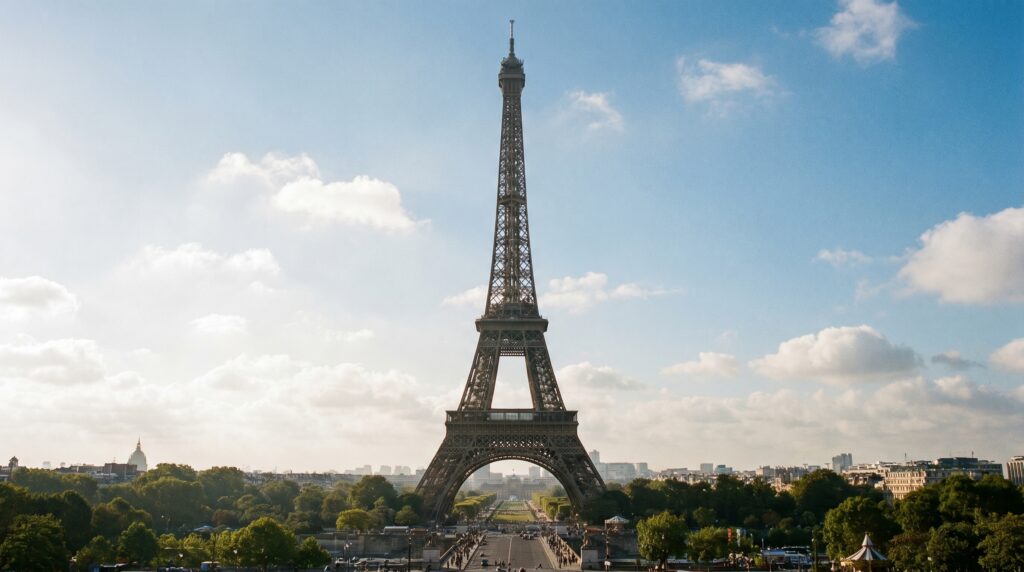
Daylight is for seeing the structure as Gustave Eiffel’s team built it. You can trace the iron lattice rivet by rivet, read the names of the 72 scientists engraved around the first balcony, and watch the Seine fold around the city from the summit at 276 metres. On a clear morning the view stretches past Sacré-Cœur to the green edge of the Bois de Boulogne.
There is a practical side too. The summit lift can shut in high wind, which happens more often than visitors expect, so an early slot gives you a second chance later if the top is closed when you arrive. Morning light also flatters photos taken from below, before the midday sun flattens the contrast. If you want the engineering, the panorama, and room to walk the open-air platforms without shuffling shoulder to shoulder, daytime wins. A guided Eiffel Tower visit can also smooth out the entry process and add context to what you are looking at.
The trade-off is the crowd. Midday and early afternoon draw the heaviest foot traffic, and the security line at the base can eat an hour before you reach a lift. Booking a timed ticket online ahead of your visit is the single change that saves the most frustration.
Why the night show changes everything
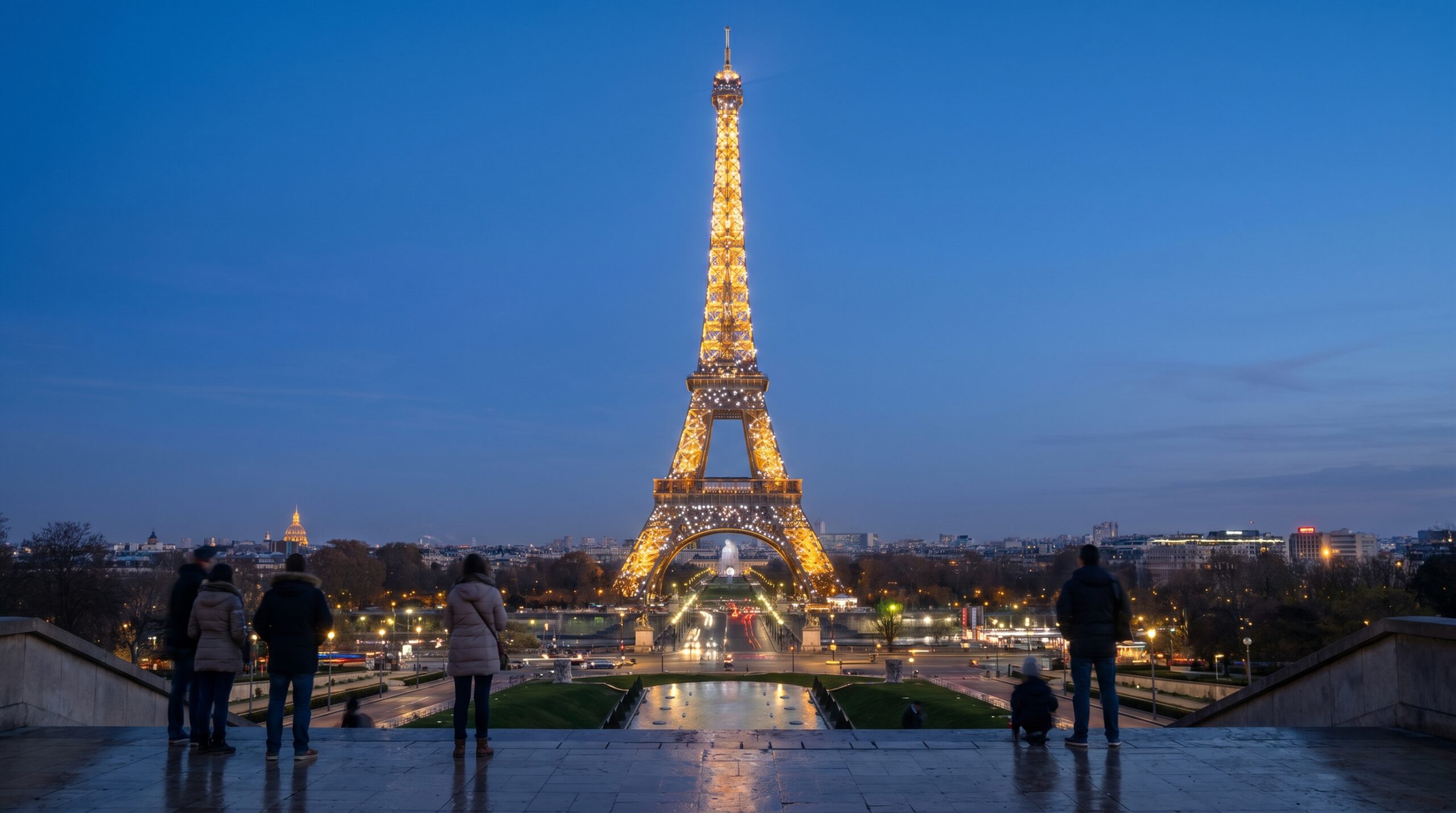
Here is the part the daytime crowd misses. After dusk the tower switches on its golden lighting, and then, for the first five minutes of every hour, twenty thousand bulbs flicker across the whole frame in a fast, glittering burst. The sparkle runs for five minutes at the beginning of each hour from nightfall until midnight or 1 a.m. depending on the season. During the summer months the performance is extended, with the final sparkle occurring at 1 a.m.
The effect was no accident. The sparkling display uses 20,000 6-watt bulbs flashing in quick succession, an effect inspired by camera flashes, and the illumination as we know it today was designed by lighting engineer Pierre Bideau. The sparkling show was first created in the year 2000. The display is striking enough that most first-time visitors describe standing still through the whole five minutes before they remember to take a photo.
One detail worth planning around the golden lighting and beacon turn on when night falls, and the first sparkle begins at the start of the next full hour, so if night falls at 8.35 p.m. the first sparkle takes place at 9.00 p.m. That means the start time shifts with the season, far later in June than in December.
How to decide between day and night
Ask what you want to carry home. If it is the view of Paris and a close look at the ironwork, go in daylight, ideally first thing. If it is the feeling of the city at its most cinematic, stay for the sparkle. For most first-time visitors the honest answer is to do both in one trip, because they are not really the same experience.
A few things help either way:
- Reach your viewing spot or the second-floor balcony 20 to 30 minutes before the hour so you are settled when the lights start.
- Bring a light jacket. Even summer evenings near the Seine turn cool once you stop walking.
- For the best wide shot of the full tower sparkling, the Trocadéro terrace across the river fits the whole frame in one glance.
Reading the crowds and the seasons
Crowds peak in summer and around school holidays, which is also when the tower stays open latest and the final sparkle slides to 1 a.m. Winter visits trade warmth for shorter queues and an earlier sparkle, sometimes as early as 6 p.m. when the sun sets fast. Spring and early autumn sit in the comfortable middle, with manageable lines and pleasant evening temperatures for waiting out a show.
If your schedule allows only one window, aim for late afternoon. You climb in daylight, watch the sky shift over the rooftops from the summit, descend as the golden lighting flicks on, and walk to the Trocadéro in time for the first sparkle of the night. That single stretch covers both faces of the monument without doubling back.
So the best time to visit the Eiffel Tower is not really a single hour. The daytime visit gives you the engineering and the view. The night visit gives you the moment people remember for years. Pick the one that matches your trip, and if you can, hold your evening open for the sparkle. If you want to round out the Paris itinerary with another landmark close by, the Notre Dame tours run by Uncle Sam Tours are conducted in English by expert guides who cover the history, architecture, the fire, and the restoration, highlighting details that many visitors often overlook. The tour includes scheduled access with a semi private group option.