
Forget what you know about the word Romanticism. In art history, it has nothing to do with flowers or candlelit dinners. It is actually the opposite. It is the realm of nightmares, storms, and raw, unfiltered emotion. The ultimate symbol of this shift is the Raft of Medusa Louvre masterpiece by Théodore Géricault. Before this painting arrived, French art was obsessed with order and logic. Géricault tore those rules apart to prove that art could be ugly, messy, and deeply political.
Rejecting Neoclassicism for the Raft of Medusa Louvre
To understand why Géricault was such a rebel, you have to look at what was popular at the time. The dominant style was Neoclassicism. This movement featured Greek heroes and Roman generals. The lighting was always even, the figures looked like marble statues, and the goal was to teach a moral lesson about duty.
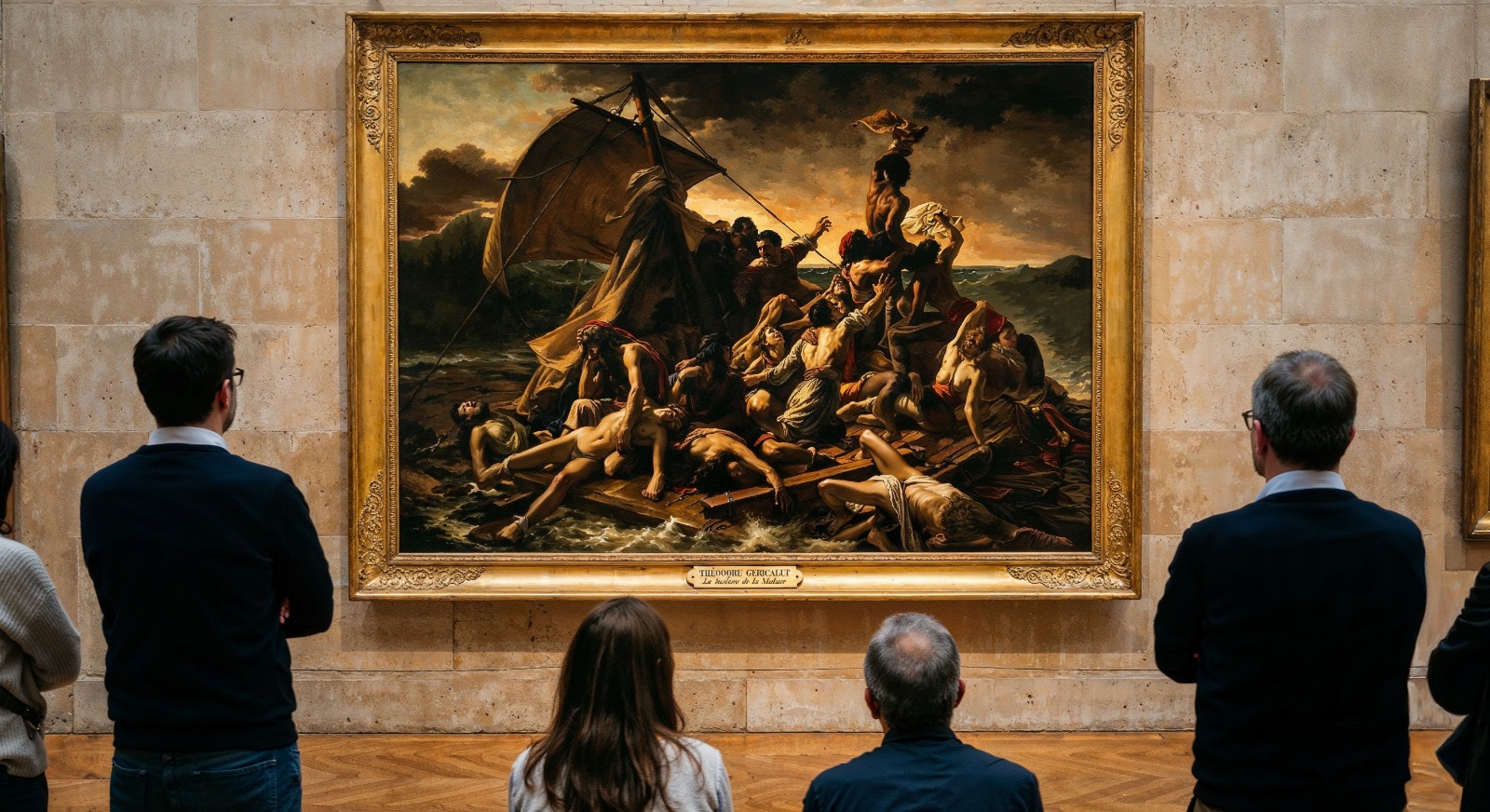
Géricault rejected every bit of that tradition in his work. He showed no glorious general saving the day. Instead, he painted a pile of dying, desperate sailors. There is no moral lesson here. The story is about government incompetence and the horrors of cannibalism. It does not teach you how to be a good citizen. It aims to terrify you. While Neoclassicism used balanced horizontal lines, the Raft of Medusa Louvre composition used a chaotic, surging pyramid of bodies.
Prioritizing Emotion Over Logic
The core rule of Romanticism is that emotion is more important than reason. Géricault wants you to feel the panic in your chest. He achieved this through a technique called chiaroscuro. This involves extreme contrast between light and dark. The pale, sickly bodies are set against a pitch-black ocean. The light does not look like natural sunlight. It feels like a harsh spotlight on a theater stage. This choice heightens the drama. Neoclassical art speaks to your brain, but Romantic art screams at your gut.
The Raft of Medusa Louvre and Man vs Nature
Romantic artists were fascinated by how small humans are compared to the natural world. They called this concept The Sublime. It refers to that specific mix of terror and awe you feel when looking at a massive storm.
In this artwork, the ocean is the primary antagonist. On the left side of the painting, a massive wave looms. It threatens to swallow the raft whole. The sky is dark and heavy. Humans are reduced to tiny piles of flesh clinging to a few pieces of wood. Nature is depicted as a force that is completely indifferent to human survival.
Capturing Contemporary Reality and the Anonymous Hero
Neoclassical painters preferred the safe past. They painted events from thousands of years ago because it was unlikely to offend the government. Romantic painters like Géricault focused on the “Now.” This painting depicted a real-life scandal that had happened only three years prior. It was the nineteenth-century version of painting a shocking headline from today’s newspaper.
Additionally, the hero is not a King or a God. Look at the very top of the pyramid of bodies. The man waving the red shirt is an African crew member. In the social hierarchy of the time, he was the lowest-ranking person on the ship. Yet Géricault places him at the highest point of the composition. He is the one who spots the rescue ship, making him the ultimate savior.
The Legacy of Géricault
When you see the Raft of Medusa Louvre exhibit, you are witnessing the exact moment art changed forever. Géricault opened the door for artists to explore their darkest nightmares. He paved the way for future legends like Delacroix and Van Gogh. He proved that a painting does not have to be pretty to be great. It just has to be true.
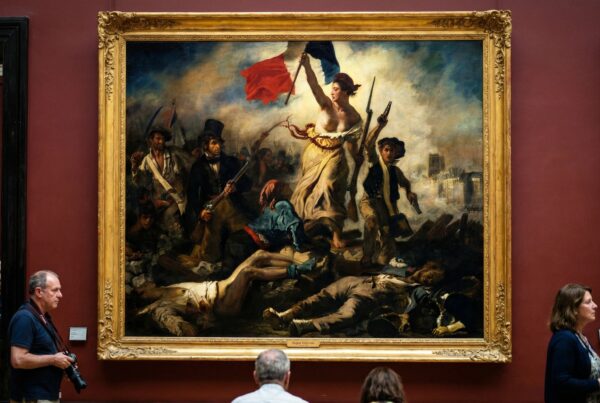
Another revolutionary painting displayed in the Louvre Museum is explored in The Pop Culture Legacy of Liberty Leading the People, a masterpiece that became a symbol of revolution and freedom.